Minter
 Quack AI
 NEAR Protocol
 Pearl
Pearl Sui
Sui Pons
Pons Quantus
Key Insights:
- John Deaton files class-action lawsuit against Linqto for fraud.
- Ripple clarifies no direct equity sales through Linqto platform.
- Deaton targets Linqto CEO to bypass bankruptcy protections.
Crypto lawyer John Deaton has filed a class-action Linqto lawsuit, accusing the equity investment platform of fraudulent practices involving pre-IPO shares of crypto-linked companies. The case centers on Linqto’s handling of stocks tied to Ripple, Kraken, and Uphold.
The lawsuit has gained attention across the crypto sector due to its potential to redefine how token-adjacent equity sales are structured in the Web3 space.
Deaton Files Fraud Lawsuit as Bankruptcy Clouds Linqto’s Future
John Deaton’s legal action against Linqto revolves around accusations of fraud and deceptive practices. According to the suit, as updated by Eleanor Terret, Linqto marked up stocks by as much as 60% when selling shares in Ripple, Kraken, Uphold, and other crypto companies.
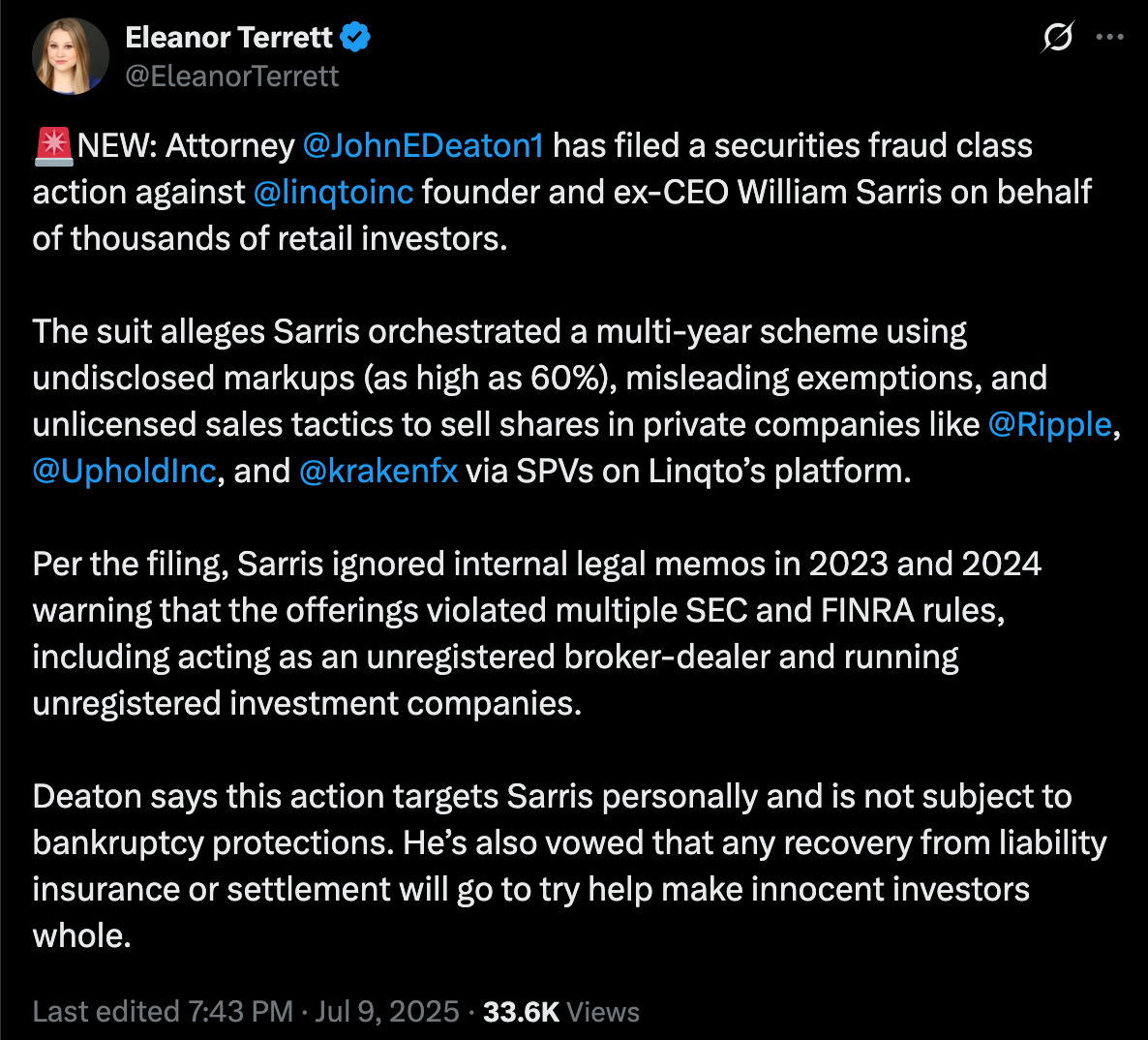
The lawsuit claims the platform used misleading tactics to create unfair advantages, thus taking advantage of investors. These actions reportedly included illegal sales practices and violating regulations the SEC and FINRA.
Notably, the lawsuit is not just a one-time complaint but a class-action case. Deaton is seeking to recover losses for thousands of retail investors who may have been affected by Linqto’s practices. The case specifically targets William Sarris, the founder and CEO of Linqto, who is named as the primary defendant. This strategic move aims to bypass any bankruptcy protections Linqto might have and increase the chances of recouping investor funds.
Meanwhile, Deaton’s lawsuit comes at a critical time for Linqto. Just a day before, Linqto filed for bankruptcy, adding a layer of complexity to the case. The move highlights the potential challenges investors face when companies involved in these fraudulent practices face financial turmoil. Deaton’s approach to going after Sarris directly ensures that those responsible are held accountable, even if Linqto’s bankruptcy could complicate efforts to recover investor funds.
Ripple Denies Direct Equity Ties to Linqto Amid Lawsuit Fallout
Amid the legal developments, Ripple’s CEO, Brad Garlinghouse, clarified Ripple’s relationship with Linqto. According to Garlinghouse, Ripple has never had a formal partnership with Linqto, nor has the company authorized any direct equity sales through the platform. Ripple’s records indicate that Linqto holds 4.7 million company shares purchased on the secondary market from other Ripple shareholders, not directly from Ripple itself.
Furthermore, Garlinghouse noted that Ripple ceased approving secondary transactions related to Linqto in late 2024. Concerns over Linqto’s business practices drove this decision. His statements mirror those of Ripple’s Chief Technology Officer, David Schwartz, who further explained the intricacies of the transactions.
Schwartz clarified that customers who purchased shares via Linqto did not own Ripple shares directly. Instead, they owned a part of a legal entity, a special-purpose vehicle (SPV), which held the actual Ripple equity.
This distinction has significant implications for the ongoing legal case. The fact that investors were not directly holding Ripple shares, but rather a portion of an SPV, underscores the situation’s complexity.
The clarification from Ripple’s leadership aims to distance the company from Linqto’s practices and alleviate concerns within the crypto community. However, the fact that Linqto was involved in selling Ripple-related shares remains central to Deaton’s lawsuit, as it highlights the legal risks those who engaged with the platform faced.
Legal Strategy Seeks Accountability Beyond Linqto’s Bankruptcy
Deaton’s decision to sue William Sarris personally is more than symbolic. By naming the executive, he aims to create a legal path that sidesteps the complications of corporate bankruptcy. If successful, the lawsuit could unlock personal accountability and financial restitution for defrauded investors.
This tactic aligns with Deaton’s previous legal efforts in high-profile crypto cases, including his role in defending XRP holders during the SEC v Ripple litigation. By moving beyond the corporate entity, Deaton signals an aggressive posture meant to enforce investor rights amid the opaque world of secondary equity sales.
As the case proceeds, the outcome may set a precedent for other platforms offering token-adjacent stock exposure without clear regulatory approval or investor protections.
Disclaimer
This article is for informational purposes only and provides no financial, investment, or other advice. The author or any people mentioned in this article are not responsible for any financial loss that may occur from investing in or trading. Please do your research before making any financial decisions.