Pearl
Pearl Bitway
 Starknet
 Pons
Pons NEAR Protocol
 Walrus
 Sui
Sui
Key Insights
- Polymarket investigations end with no charges from federal agencies.
- Election-related wagers prompted increased scrutiny from regulators last year.
- Congress nears crypto law vote as Polymarket eyes legal return.
The U.S. Department of Justice (DOJ) and the Commodity Futures Trading Commission (CFTC) have formally closed their investigations into Polymarket.
According to sources, the firm received official declination notices from both agencies earlier this month. The notice confirmed that no further action would be taken in either the civil or criminal probes.
This resolution ends months of scrutiny triggered by Polymarket’s role in facilitating wagers on the 2024 U.S. presidential election. The platform had been accused of violating a 2022 settlement with the CFTC, which required it to prevent U.S.-based users from accessing its markets.
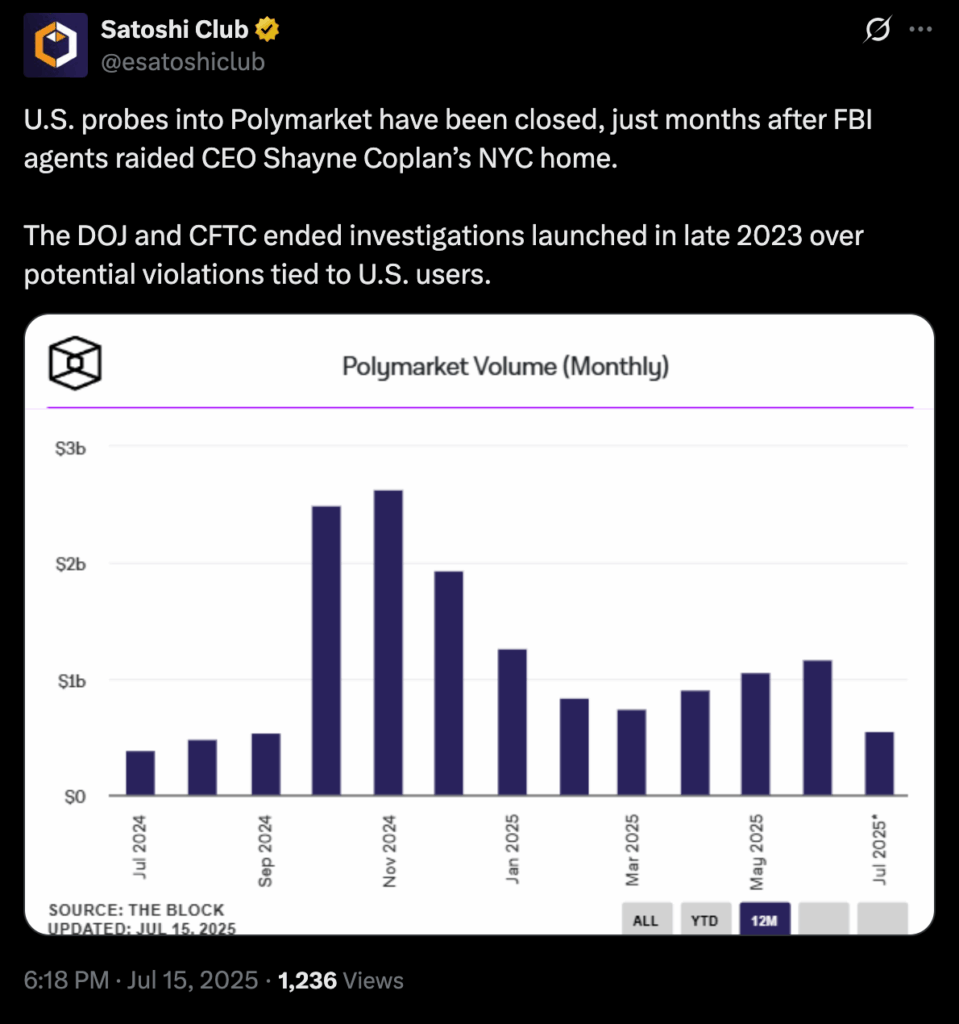
Despite these restrictions, Polymarket experienced a surge in U.S.-election-related bets, which reportedly totaled over $3.6 billion in notional volume during the 2024 cycle, according to an analysis by NBC.
Regulatory focus sharpened after FBI raid and 2024 election cycle
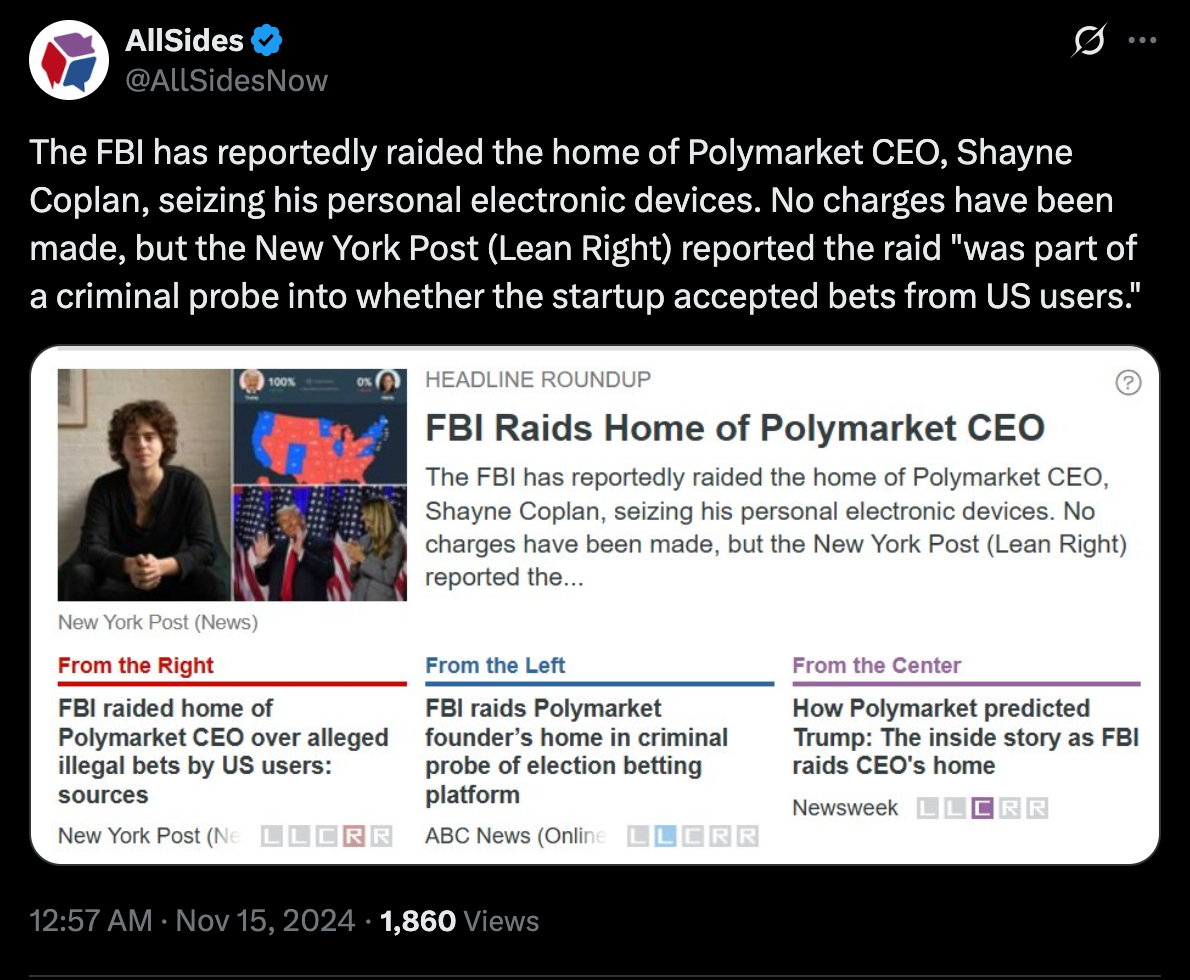
The investigations gained momentum following a high-profile FBI raid on the Manhattan apartment of Polymarket’s CEO, Shayne Coplan, in late 2024. Federal agents seized electronic devices including Coplan’s personal cellphone as part of the inquiry, though no criminal charges were filed.
The raid, which occurred just weeks after the contentious U.S. presidential vote, fueled speculation about the motivations behind the enforcement actions.
Bloomberg and CNBC said the Manhattan U.S. Attorney’s Office led the DOJ’s criminal probe. The CFTC reexamined Polymarket’s compliance with prior agreements prohibiting access by U.S. residents.
The settlement had required the company to pay a $1.4 million penalty for failing to register as a facility for event-based binary options.
The DOJ and CFTC had been investigating whether Polymarket continued to accept bets from U.S. persons using virtual private networks (VPNs) or other workarounds. This is despite the platform’s public claim of excluding such users. These concerns were amplified during the 2024 election, when Polymarket reportedly drew more than $1 billion in open wagers across its U.S. political markets.
Regulatory shift aligns with broader deregulatory signals under new administration
The closure of the Polymarket investigations comes amid a broader trend of deregulatory shifts in the digital asset sector.
The Trump administration, which returned to power in 2025, has taken a notably different approach toward crypto-related enforcement actions compared to its predecessor.
In a related move earlier this year, the CFTC dropped its appeal of a federal court ruling that allowed prediction market KalshiEx to offer contracts based on U.S. election outcomes.
This reversal marked a significant shift in how regulators view prediction markets. This is particularly as Congress nears a vote on comprehensive crypto legislation.
The proposed bill, which is expected to pass this week, would provide legal clarity for blockchain-based platforms operating in the United States.
Polymarket eyes expansion amid closure of legal cloud
With legal uncertainty now resolved, Polymarket is positioning itself for renewed growth. The firm recently attracted new funding led by Founders Fund, the venture capital firm founded by Peter Thiel.
Additionally, Polymarket has formed a high-profile partnership with Elon Musk’s social media platform X. It has also partnered with his artificial intelligence firm xAI to provide event forecasting capabilities.
The new collaboration integrates Polymarket’s prediction data into X, enabling real-time event forecasts and betting odds to reach a broader audience.
This strategic alignment with Musk’s ecosystem reflects the company’s pivot toward mainstream visibility following the turbulence of the 2024 election cycle.
Despite maintaining that U.S. users have been barred since 2022, Polymarket has acknowledged the need to strengthen compliance systems to prevent illicit access.
Sources close to the company say that ongoing product improvements and regulatory discussions are potentially part of an effort to reestablish a legal footprint in the United States. This comes as global regulators continue making strides in overlooking the crypto sector.