astronaut
 Walrus
 Pearl
Pearl Bitcoin
 NEAR Protocol
 Zcash
Zcash Hyperliquid
Fraudulent apps pretending to be Hyperliquid have been found on the Google Play Store.
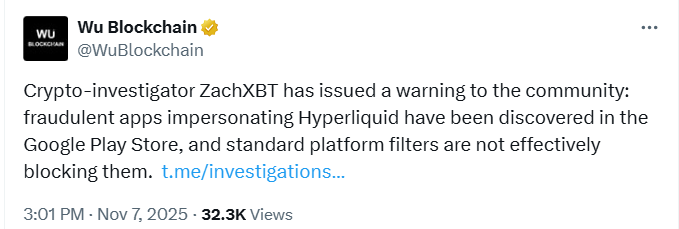
The warning came from on-chain investigator ZachXBT, who stated that the fake apps had slipped past Google’s regular security filters.
Notably, this discovery adds to growing worries about fake crypto apps targeting traders and investors.
Fake Apps Target Hyperliquid Users
It is worth noting that the fake Hyperliquid apps were designed to look like the real trading platform.
As detailed, their goal is to trick users into downloading them and possibly sharing personal or wallet details.
ZachXBT shared the alert on social media, urging users to double-check what they download from the Play Store.
Google’s filters failed to block the scam apps, showing how easy it has become for bad actors to upload fake versions of popular crypto tools.
It is worth noting that this is not the first time crypto investors have been targeted through app stores.
Criminals often create apps that use the names or logos of trusted platforms to steal funds or data.
Market participants believe that as Hyperliquid gains more users, scammers appear to be taking advantage of its reputation.
Market experts advise users to download crypto-related apps directly from verified links on the project’s official website.
It also helps to check the developer name, number of downloads, and app reviews before installing.
DIMO Network Faces Token Withdrawal Issue
Blockchain security firm CertiK has also reported suspicious activity involving the DIMO Network.
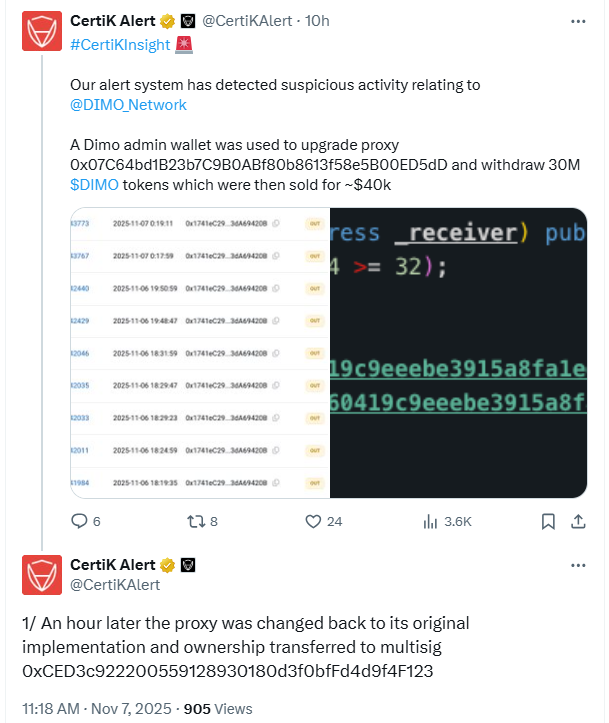
Per the update, the firm said one of the project’s administrator wallets was used to upgrade a proxy contract and withdraw 30 million DIMO tokens.
Notably, the tokens were then sold for about $40,000.
Shortly after the withdrawal, the contract was reverted to its original form, and ownership was transferred to a multisignature wallet.
CertiK is still reviewing the incident, but it is not yet clear whether it was an internal mistake or a security breach.
The situation has raised concerns among users, as unauthorized access to admin wallets could lead to larger losses in the future.
Security teams continue to remind project owners to protect their smart contracts and use trusted multisig controls to avoid single points of failure.
This latest event adds to a long list of token-related incidents that have hit the decentralized finance space.
While no user funds have been confirmed lost in this case, the development highlights the need for stronger internal controls.
Ongoing DeFi Hacks and Malware Threats
It is also worth noting that other cryptocurrency projects have faced new security issues this week.
Balancer, a major DeFi protocol, was recently exploited, leading to losses of more than $120 million.
The team stated that the problem originated from how its system handled token balance rounding during specific transactions.
According to data from EmberCN, the staking platform StakeWise was able to recover $19.3 million from the stolen funds linked to the attack.
The hacker had transferred a significant portion of the funds to the Ethereum network before recovery efforts began.
In a related development, cybersecurity researchers discovered a new two-part malware attack called LeakyInjector and LeakyStealer.
The malware targets crypto wallet users by hiding inside normal Windows processes. It steals stored browser and wallet data while avoiding most antivirus checks.
These incidents demonstrate the widespread nature of crypto security issues. Scammers are employing increasingly sophisticated methods to target users through both apps and software exploits.
If anything is clear, the rise of fake apps and repeated DeFi breaches demonstrate that crypto security remains a significant challenge.
The fake Hyperliquid app is another example of how scammers exploit growing user interest in digital assets.
Experts advised that users should always confirm app details, avoid unknown links, and follow verified updates from official channels.