Pearl
Pearl Walrus
 Bitway
 Bitcoin
 Quantus
 Quant
Quant Pudgy Penguins

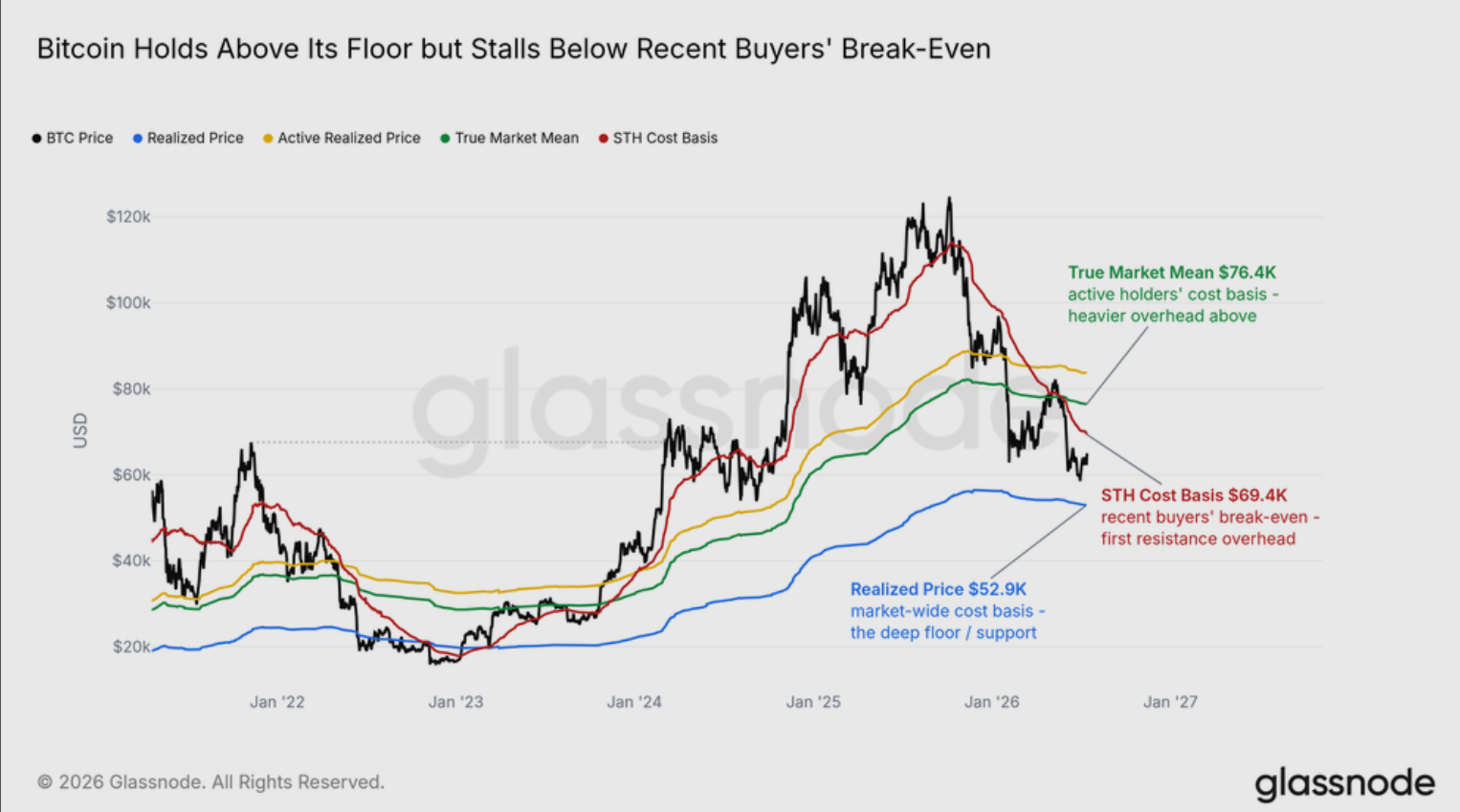
Glassnode’s bitcoin price prediction placed $69,000 as resistance after losses among older holders began cooling. Bitcoin traded near $64,040 on July 16, leaving the market roughly 8% below that cost-basis barrier. The setup mattered because a reclaim could shift recent buyers back into profit.
The signal arrived as BTC crypto markets responded to softer U.S. inflation data. The Bureau of Labor Statistics said inflation slowed to 3.5% in June from 4.2% in May. That release weakened immediate rate pressure and supported Bitcoin’s rebound from the June lows.
Bitcoin Price Prediction Tracks a Measured Spot Recovery
CoinGecko data showed Bitcoin closed at $64,720 on July 15 after reaching $64,977 one day earlier. Trading volume reached about $31.6 billion on July 16, while market capitalization stood near $1.28 trillion. The figures showed higher participation, though price remained below its near-term on-chain resistance during that period.
Glassnode said Bitcoin reacted more strongly than major equity indexes after the inflation release. Its July 15 Week Onchain report linked the move to easing seller pressure and improved liquidity sensitivity. However, the research firm said spot demand had not confirmed the derivatives repositioning.
Farside Investors recorded $107.7 million in U.S. spot Bitcoin exchange-traded fund inflows on July 15. The flow followed $138.9 million one day earlier, suggesting institutional demand had started improving. Still, Glassnode said prior redemptions had only slowed, rather than fully reversed.
Bitcoin Price Prediction Faces the $69,000 Cost Basis
Glassnode placed the short-term holder cost basis near $69,000. That metric represents the average acquisition price for coins held under 155 days. Recent buyers often sell near breakeven after prolonged drawdowns, creating supply around their entry level.
The firm said Bitcoin traded above its realized price but below short-term holders’ average cost. This placed BTC between a broader bear-market floor and nearby overhead resistance. A sustained close above $69,000 would reduce pressure from underwater recent buyers.
A rejection would preserve the existing range. CoinGecko’s July 16 price near $64,000 left Bitcoin about $5,000 below that threshold. Analysis suggests buyers require stronger spot volume before treating the move as a confirmed trend reversal.
The immediate range also remained narrow. CoinGecko showed daily closes holding between $62,269 and $64,977 from July 13 through July 15.
Realized Loss Reversal Supports the Bottoming Case
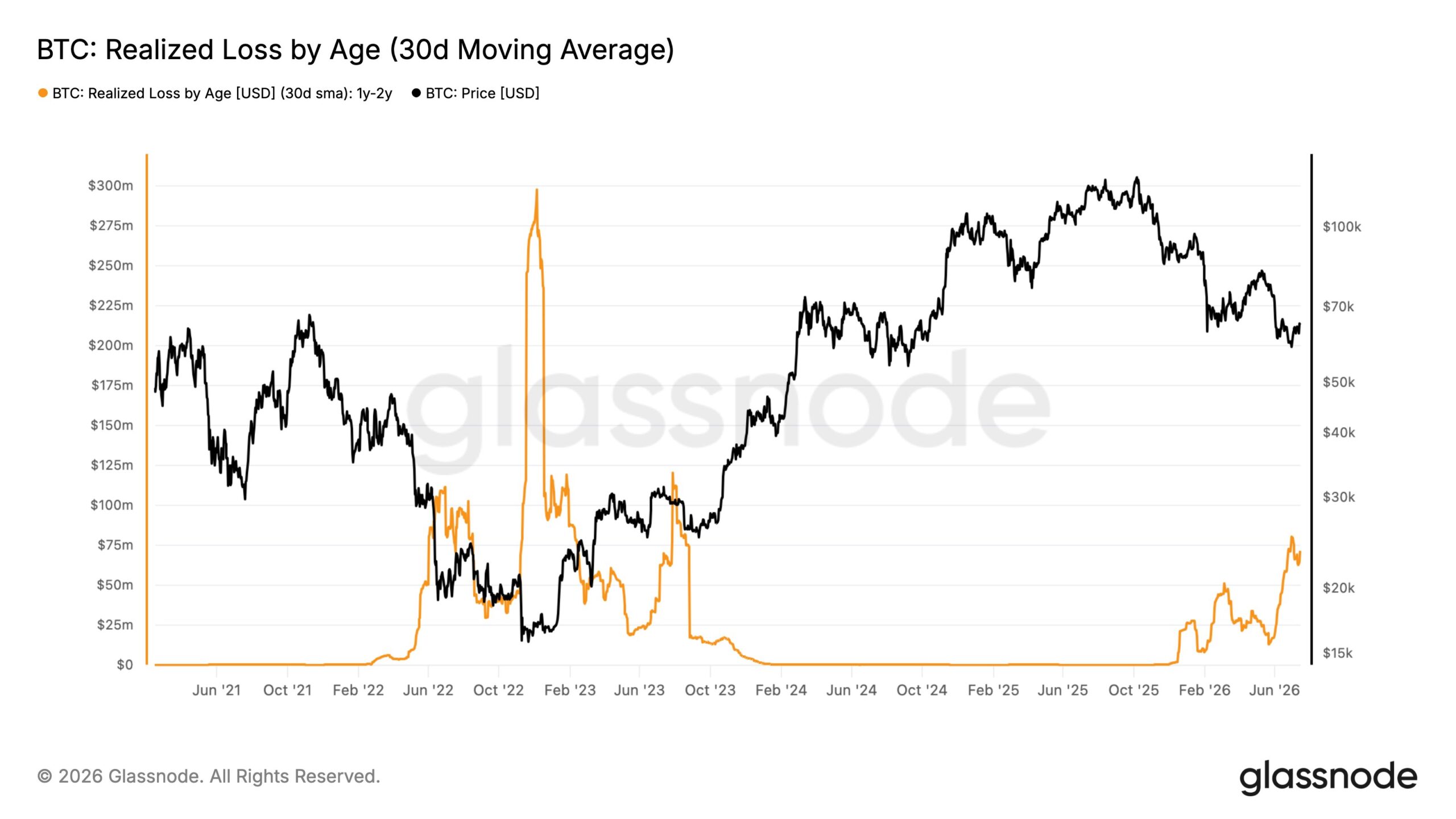
CryptoVizArt, Glassnode’s lead research analyst, tracked realized losses among one-to-two-year holders. The analyst said this group bought between July 2024 and July 2025. Bitcoin traded from roughly $62,800 to $107,000 during that period, leaving many holders underwater.
The cohort’s 30-day average realized losses recently exceeded $75 million before turning lower. CryptoVizArt said durable bear-market floors historically emerged after this group exhausted its selling. The reversal therefore suggested distribution had started weakening, rather than proving a completed bottom.
Glassnode’s broader data supported that reading. Its July 15 report said long-term holder realized losses peaked two weeks earlier and then declined. The firm also found broad accumulation across wallet sizes during Bitcoin’s June lows.
BTC Crypto Derivatives Reduce Downside Pressure
Glassnode said the options put-to-call ratio fell to its lowest level of 2026. Traders had allowed downside protection to expire, while perpetual funding stayed slightly above neutral. That structure showed fewer bearish bets without producing crowded long positioning.
The firm also said Bitcoin’s 25-delta options skew had eased since June. Crash protection remained more expensive than upside exposure, but the premium had narrowed. Meanwhile, Deribit defines its DVOL index as annualized expected Bitcoin volatility derived from options prices.
Glassnode placed DVOL near its lowest level in one year. Low volatility can support range trading, but compression often precedes larger price movements. The direction still depends on spot demand, exchange-traded fund flows, and the $69,000 test. Until spot buying expands, derivatives alone cannot confirm durable market strength.
The next verifiable macro catalyst is the July Consumer Price Index release on Aug. 12. Before then, Bitcoin’s first close above $69,000 would strengthen the recovery case. Failure there would keep the bitcoin price prediction tied to consolidation above the June base.