
 Quack AI
 NEAR Protocol
 Quant
Quant Ondo
Ondo Zcash
Zcash Pearl
Pearl Sui
Sui
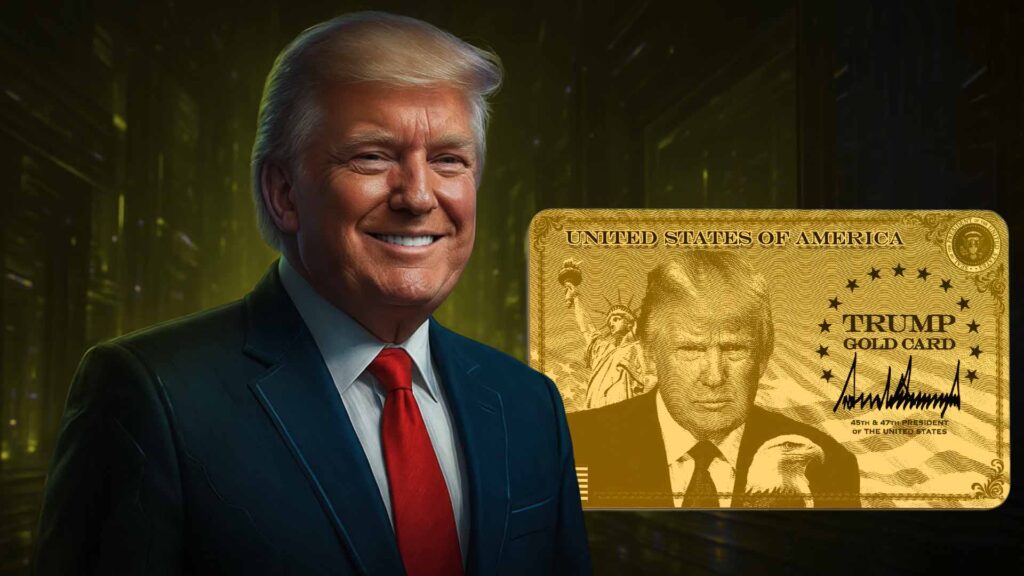
U.S. President Donald Trump authorized the Trump Gold Card program on September 19, 2025, by signing an executive order. The initiative gives affluent individuals and firms a new path to immigration.
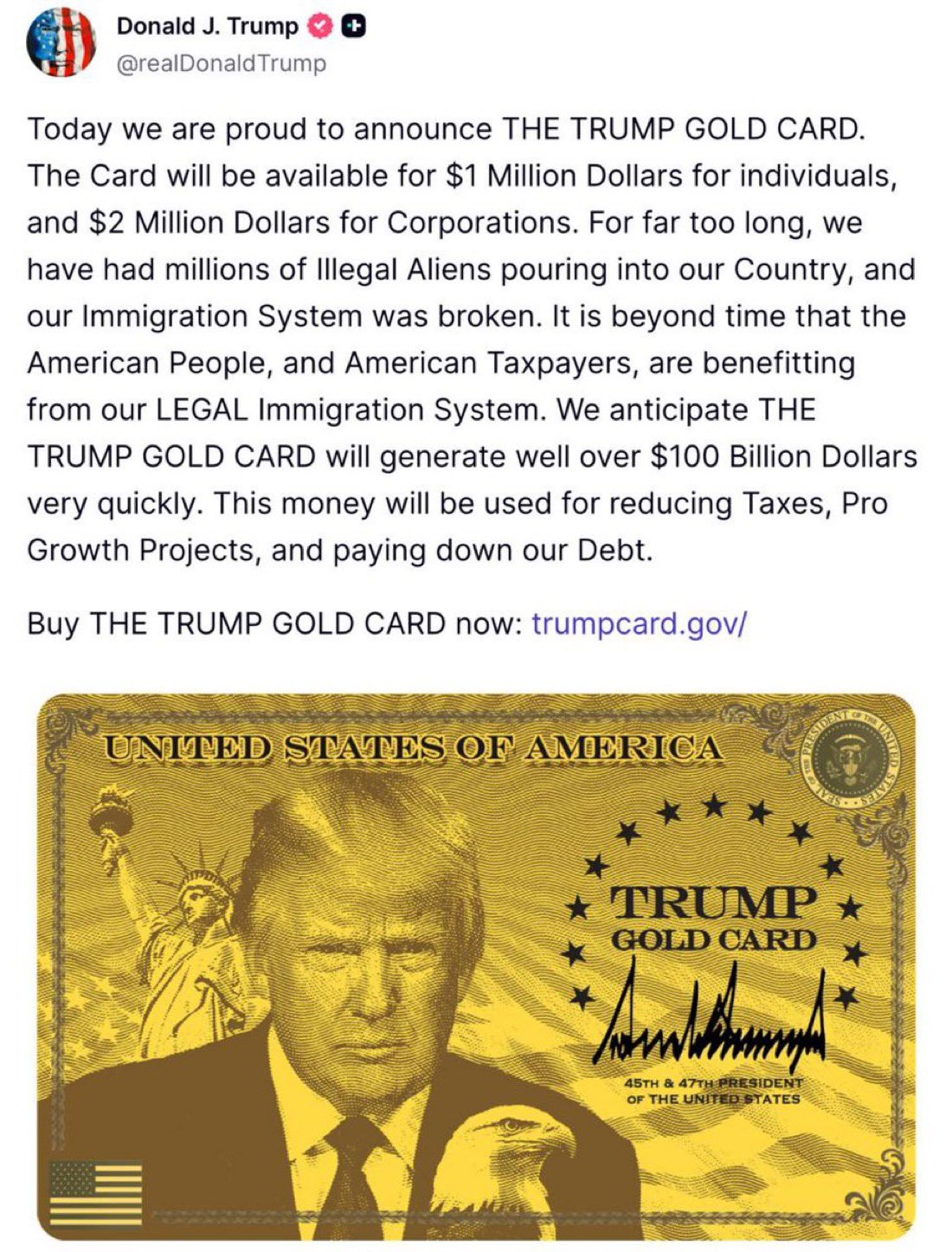
They must invest large sums of money in the US to be eligible. A $1 Million gift to the government can grant a person U.S. residency. On the other hand, companies can sponsor employees for $2 Million.
Like the Green Card, the Gold Card seeks to expedite immigrant visas and grant lawful permanent residency. Before being approved, applicants are screened by the Department of State and the Department of Homeland Security (DHS).
The card is accepted in all 50 states and U.S. territories. According to Trump and officials, the program is expected to generate over $100 Billion. This will assist them in financing tax reductions, initiatives for economic expansion, and debt relief.
How the Program Works
The Gold Card replaces the current EB-1 and EB-2 visa categories. This has historically given residency to people with exceptional skills or business acumen.
The Gold Card offers significant financial contributions in place of complex applications and investment barriers. For qualified applicants, it also provides quicker processing.
Applicants pay a $15,000 vetting fee and a non-refundable processing fee. Eligible applicants are granted permanent residency status following thorough background checks.
For $2 million per employee, corporations can purchase “Corporate Gold Cards” for their staff. These cards confer residency rights in the United States. Pre-approved employees can share those privileges.
Additionally, Trump’s administration suggested a $5 million “Platinum Card.” Holders of this card are exempt from paying taxes on non-U.S. income for up to 270 days per year while in the country. Congress has not yet approved it, though.
The Gold and Platinum Cards aim to draw extremely wealthy investors and job creators to the United States. Priorities for immigration are shifting in favor of economic contributions.
The Secretary of Commerce is responsible for overseeing the program’s implementation. The U.S. Treasury must receive all funds received.
In addition, the Secretary will collaborate with Homeland Security and State to manage applications and approvals. Timelines and implementation details must be finished within ninety days of the order’s signing.
Benefits and Controversies
Supporters claim that the Gold Card will generate more than $100 billion in revenue. Giving high-value contributors priority will also encourage legal immigration. The money will go toward debt repayment, tax reduction, American industry, and trade.
Howard Lutnick, the Secretary of Commerce, emphasized the program’s potential to replace earlier, ineffective, and fraudulent investment visa programs. The Gold Card is anticipated to generate employment by drawing in affluent investors and entrepreneurs.
Critics, however, call this program “political fan service” and “ludicrously lawless.” They are questioning the fairness and compliance with immigration laws of millions of dollars’ worth of fast-tracked visas.
The program’s bypassing conventional immigration laws may give rise to legal issues. Experts warn of possible harm to workplace protections and immigration integrity.
The executive order also introduced a new fee of $100,000 for H-1B visas. It was brought in to stop tech companies from abusing their work visas.
By curbing excessive use of H-1B, this fee seeks to safeguard American workers. Employers who depend on foreign talent, however, may oppose it.