
 Bitcoin
 Ondo
Ondo NEAR Protocol
 Walrus
 Pearl
Pearl Pons
Pons Ethereum

Key Insights:
• Bitcoin USD starts December red while bottom-zone signals reappear across on-chain metrics.
• Stablecoin reserves on Binance hit a six-year extreme, signaling major buying power.
• Short-term holders capitulate again, matching historical pre-rally market conditions.
Bitcoin price opened December in the red after dropping nearly five percent on the month, marking the weakest December performance in four years. Market sentiment deteriorated quickly, yet several on-chain signals suggested conditions that previously aligned with major Bitcoin price reversals. Data shared across X showed capitulation among short-term holders, a surge in stablecoin reserves, and rising fear levels that historically accompanied cycle bottoms.
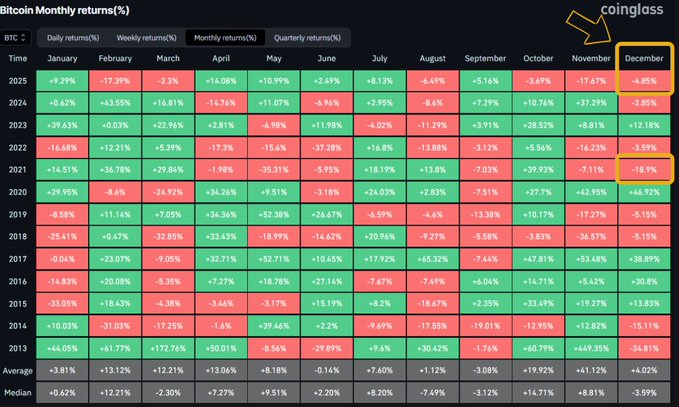
Coin Bureau noted that Bitcoin entered December with a monthly return of –4.85 percent, calling it the weakest start since 2021. Bitcoin traded near eighty-six thousand dollars when the update was posted. The decline extended a month-long downtrend visible on TradingView charts, where Bitcoin continued to move inside a steep falling channel.
CryptosRus argued that the market displayed a key bottoming structure despite the weakness. He highlighted that the Short-Term Holder Spent Output Profit Ratio, or STH-SOPR, slid toward the 0.90 level. That zone appeared only during major capitulation phases, including 2018, 2020, and 2022. He added that weak hands sold at a loss while Bitcoin still held its broader structure. According to his analysis, the same pattern preceded large rallies in previous cycles.
The sentiment drop intensified through the day. That Martini Guy reported that the Crypto Fear and Greed Index fell to twenty-four, reaching the extreme fear category from yesterday’s twenty-eight reading. The shift reflected rising uncertainty after repeated sell-offs and limited recovery attempts. Bitcoin continued to test support levels within the falling channel, as volatility increased.
Historical Patterns Reappear After Bitcoin USD December Breakdown
CryptosRus also compared current conditions with the pattern observed during Bitcoin’s 2021 cycle peak. He explained that the signal was now inverted. In 2021, Bitcoin topped while sentiment remained optimistic. In 2025, he argued that Bitcoin was bottoming, despite sentiment appearing pessimistic. He noted that Bitcoin dominance trended upward again while the Ethereum-to-Bitcoin pair moved near long-term support.
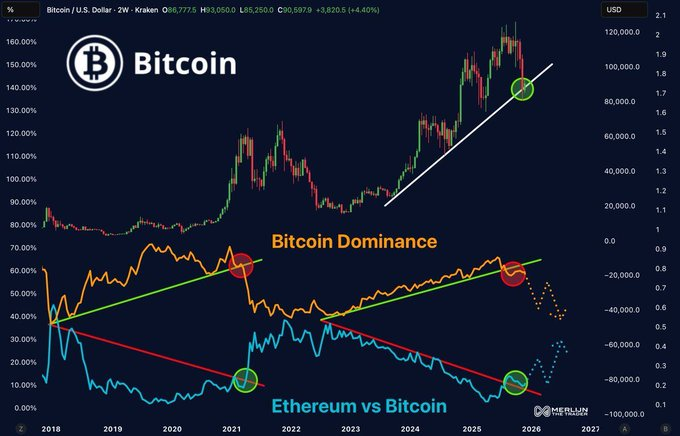
The observation aligned with broader market structure. Bitcoin reacted cleanly to a key trendline, according to the post, even as traders turned bearish. He suggested that nothing in the current structure resembled a true market breakdown. Instead, he framed the move as a market reset before a potential trend continuation. The assertion matched the behavior seen on the daily chart, where price approached the lower boundary of the descending channel before stabilizing.
Short-term holder capitulation remained a recurring theme in the analysis. CryptosRus stated that Bitcoin absorbed three weeks of loss-taking without breaking the underlying trend. He pointed to earlier cycles where similar behavior coincided with market troughs. The compression near the STH-SOPR zone suggested exhaustion among reactive sellers. That pattern formed before large swings in past years.
Stablecoin Reserves Hit Six-Year Extreme as Buying Power Builds
Another source, CryptoOnchain, identified an unusual event on Binance. He reported that the “Bitcoin to Stablecoin Reserve Ratio” reached its lowest point since 2018. The ratio fell to 1.008, indicating that stablecoins on Binance exceeded Bitcoin holdings at levels unseen in over six years. CryptoOnchain called the move a rare historical shift.
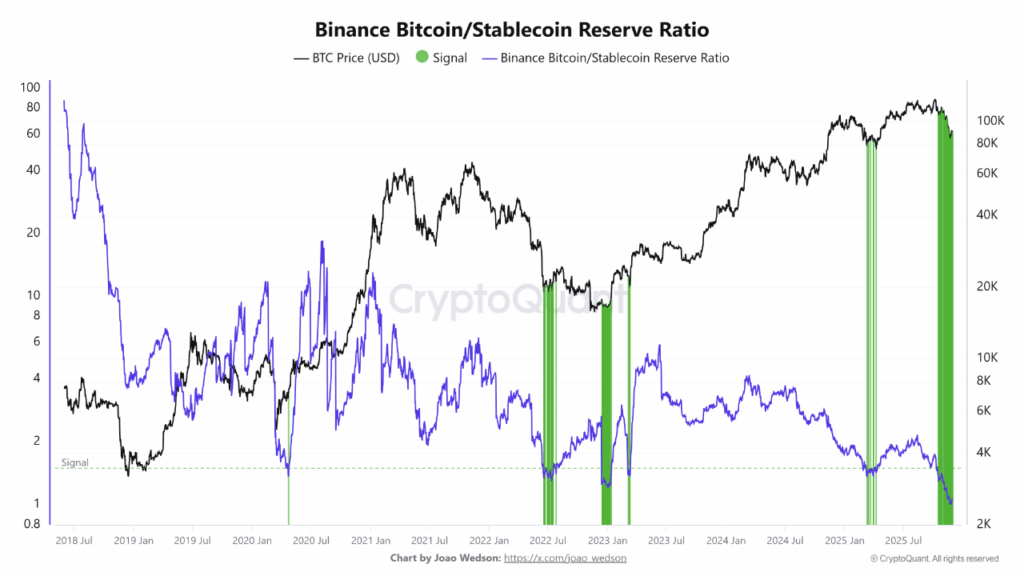
He interpreted the decline as a buildup of potential buying pressure. The large volume of stablecoins suggested that traders held substantial liquidity while waiting for an entry point. He noted that previous troughs in the ratio aligned with strong Bitcoin rallies because liquidity concentrated on the sidelines eventually flowed back into the asset.
The chart he referenced showed the green bars rising sharply as stablecoin levels grew relative to Bitcoin. He argued that the market was “locked and loaded,” with enough liquidity to fuel a notable move. The observation matched the broader narrative presented by other analysts, who hinted at accumulation patterns during periods of fear.
Market Fear Climbs While Analysts See Structural Strength
The surge in fear contrasted with the technical picture presented by several market watchers. Bitcoin’s downtrend placed the asset near prior accumulation zones, yet on-chain data showed resilience among long-term holders. The falling channel, clearly visible on TradingView, narrowed as price approached potential reversal areas.
Coin Bureau’s observation of the weakest December in four years added weight to the argument that pessimism dominated early in the month. The combination of negative returns, high fear, and heavy capitulation often marked late-stage corrections rather than structural breakdowns.
Bitcoin traded near the eighty-six thousand-dollar level at the time of the analysis. Analysts remained divided on timing but agreed that conditions resembled earlier bottom-formation phases. With stablecoin reserves rising and short-term holders selling at losses, the market entered a zone historically associated with recovery attempts.
The coming sessions may determine whether Bitcoin respects the falling channel or attempts a reversal fueled by renewed liquidity. For now, the data suggests a market shaped by fear but supported by hidden strength beneath the surface.