astronaut
 Pearl
Pearl NEAR Protocol
 Starknet
 Zcash
Zcash Pudgy Penguins
 Ethena

On December 20, 2025, a cryptocurrency holder lost nearly $50 million in USDT stablecoins. The theft happened through an address poisoning scam on the Ethereum blockchain. The victim had been active for two years and made a small test transfer before moving larger sums.
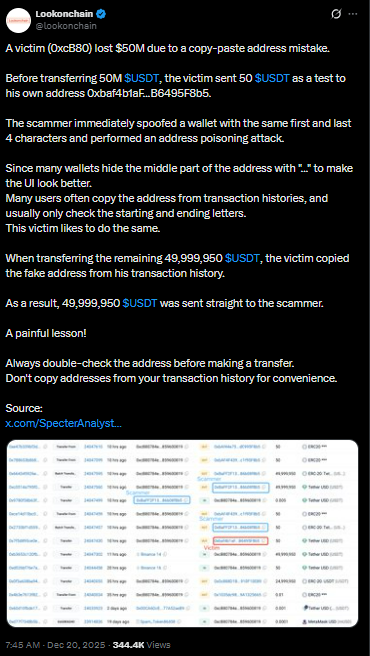
A scammer quickly exploited this step. The incident illustrates how even simple mistakes can result in significant losses. It also highlights persistent risks in blockchain systems and the need for stronger safeguards.
How the Scam Worked
The victim first sent 50 USDT to their own wallet address, 0xbaf4b1af7e3b560d937da0458514552b6495f8b5. Soon after, a scammer sent a tiny “dust” transaction of 0.005 USDT from a spoofed address. T
his fake address, 0xbaff2f13638c04b10f8119760b2d2ae86b08f8b5, looked almost identical. It matched the first three and last four characters of the victim’s real address.
Many wallets shorten addresses for display. They show only the beginning and the end. Users often rely on these partial views. Some copy addresses directly from transaction history without checking the full string.
The victim did exactly that. They copied the fraudulent address from history and sent 49,999,950 USDT to the scammer.
The transfer happened in a single block. The scammer then moved quickly. The stolen USDT was converted into Ethereum through decentralized exchanges.
Funds were spread across multiple wallets. Some were sent through Tornado Cash, a privacy tool that mixes transactions to hide trails. This made recovery almost impossible.
Growing Threat of Address Poisoning
Address poisoning, also known as address spoofing, has become a common attack method. Scammers watch blockchain activity for high‑value wallets. They send small amounts from fake addresses that look similar to real ones. Their goal is to pollute transaction history and trick users into copy‑paste errors.
Blockchain security reports indicate losses exceeding $100 million from these scams across Ethereum and its layer-2 networks in 2024. Victims often include experienced users handling large sums.
This case is one of the largest single losses from such a scheme. It surpassed a $700,000 USDT theft earlier in 2025. It was smaller than a $71 million wrapped Bitcoin attempt in 2024, where the victim managed a partial recovery.
The scam highlights weaknesses in wallet design. Many wallets focus on clean interfaces. They abbreviate addresses for readability. But this convenience helps attackers. Experts say awareness has grown, yet attacks continue. Better safeguards are needed.
Lessons and Implications
Proposed solutions include full‑address verification prompts in wallet software. Hardware wallets can also help by showing complete addresses on secure screens. Human-readable names, such as Ethereum Name Service (ENS) domains, may reduce errors.
The incident also shows the irreversible nature of blockchain transfers. Unlike banks, crypto transactions cannot be reversed once confirmed. Some issuers, like Tether, freeze suspicious addresses after theft.
But prevention depends mostly on users. Best practices include manually checking full addresses, avoiding copying from history, and whitelisting frequent recipients.
As crypto adoption grows, such scams damage trust. Fortunes can vanish in seconds due to small oversights. With trillions in digital assets worldwide, address poisoning remains a serious risk.
Blockchain analytics firms expose these patterns, but true safety requires both technology upgrades and user vigilance.