
 Aerodrome Finance
 Pearl
 Quantus
 Axis Robotics
 Pudgy Penguins
 Zcash
 Lighter

SEC crypto rules drew support from Ripple and seven industry organizations as the October 20 comment deadline closed. Ripple urged the Securities and Exchange Commission (SEC) to adopt Regulation Crypto Assets. Six blockchain organizations filed a joint request, while Blockchain Association proposed doubling two fundraising limits.
The SEC introduced the proposal on August 18. None of the proposed exemptions has taken effect. The SEC crypto rules remain subject to final agency approval.
Ripple Backs SEC Crypto Rules, Seeks Clearer Contract Standards
Ripple submitted a comment letter supporting the SEC’s authority to finalize Regulation Crypto Assets. Alderoty said the agency should use the Howey test to determine whether a transaction involves an investment contract.
Under the XRP news, the contract creates the securities obligation, rather than automatically making the underlying token a security.
The executive criticized the SEC’s earlier reliance on individual enforcement cases to settle questions about crypto assets. Alderoty said Ripple spent more than $150 million seeking legal clarity and argued that companies need rules explaining which promises to investors trigger securities requirements. He also asked regulators to consider when an issuer has completed those commitments.
Chainlink and Five Blockchain Groups Seek Commodity Rules
Chainlink Labs joined the Cardano Foundation, Hedera, Aptos Labs, Ava Labs and the Stellar Development Foundation in a separate request to the SEC. The six organizations want the regulator to place its definition of a digital commodity directly in the final regulation, rather than leave that language in explanatory material.
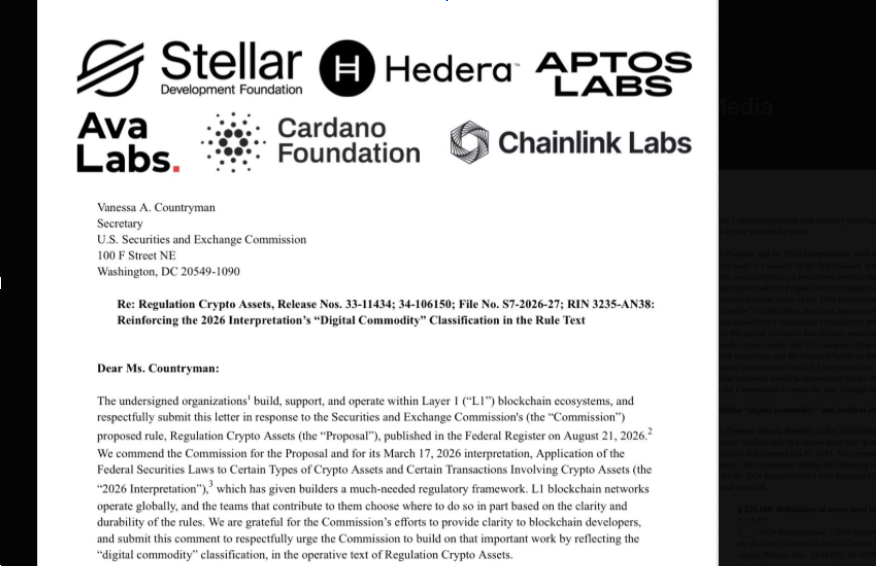
The SEC’s March 2026 interpretation identified XRP, ADA, LINK, HBAR, XLM, APT and AVAX among examples of digital commodities. The guidance described assets whose value comes from a functioning crypto network and market supply and demand.
Chainlink policy head Taylor Barr said the coalition wanted lasting rules for developers. The group also asked the SEC to make clear that digital commodities do not automatically represent ownership claims, cash-flow rights or other interests commonly attached to securities.
Blockchain Association Requests Higher Fundraising Caps
The Blockchain Association also supported the proposal but requested changes to its fundraising provisions. The industry group urged the SEC to increase the startup exemption from $5 million to $10 million and raise the larger offering limit from $75 million to $150 million.
The association wants regulators to exclude airdrops and network rewards when calculating how much capital a startup has raised under the exemption. Its October 20 letter also called for rules that account for decentralized teams, repeat founders, and public blockchain records when assessing disclosure obligations.
Another request concerned existing tokens. The association asked the SEC to let third parties submit documentation when original issuers cannot do so. The group also proposed clearer tests to determine when a development team has finished the work that originally formed the basis of an investment contract.
SEC Reviews Industry Feedback on Crypto Exemptions
The SEC introduced Regulation Crypto Assets on August 18. Under the draft, qualifying issuers could offer up to $5 million over four years or $75 million within each 12-month period without traditional securities registration. Both paths would require investor disclosures and continued compliance with federal antifraud rules.
The larger exemption would carry financial statement and ongoing reporting requirements. The proposed safe harbor would apply only after an issuer fulfilled or permanently ended its promised essential managerial activities and met the rule’s other conditions.
Other commenters sought additional changes. The Hyperliquid Policy Center asked the SEC to clarify its treatment of free token distributions. The Alternative Investment Management Association requested more detail on investor rights and potential risks for fund managers. The official comment period ended on October 20, but the SEC can still receive late submissions.
This report is for general information and does not constitute legal or financial advice. Crypto investments carry regulatory and market risks; readers should conduct independent research.