astronaut
 Pearl
Pearl NEAR Protocol
 Walrus
 Zylo Ecosystem
 Bitcoin
 Hyperliquid

Key Insights:
- Bitcoin ETFs saw $2.7B in inflows this week, the highest since January 2024
- IBIT alone posted $5.22B in volume and now holds $80B in AUM
- ETF demand reached 9,963 BTC daily vs just 450 BTC mined
Bitcoin ETFs are entering a new phase of growth as institutional capital pours in at an unprecedented pace. Over $2.7 billion flowed into U.S.-listed spot Bitcoin ETFs this week, making it one of the strongest weekly performances since their launch.
This surge in demand has pushed the total assets under management (AUM) across all Bitcoin ETFs to a record $158.03 billion, according to fresh data from SoSoValue.
Record Inflows Push Bitcoin ETF Market to New Heights
Over the course of just two trading days—Thursday and Friday—Bitcoin ETFs attracted a combined $2.21 billion in new capital. Thursday alone saw inflows of $1.18 billion, followed by $1.03 billion on Friday, according to data from Coinglass. BlackRock’s IBIT led these flows with a single-day inflow of $953.5 million, capturing nearly 95% of Friday’s total.
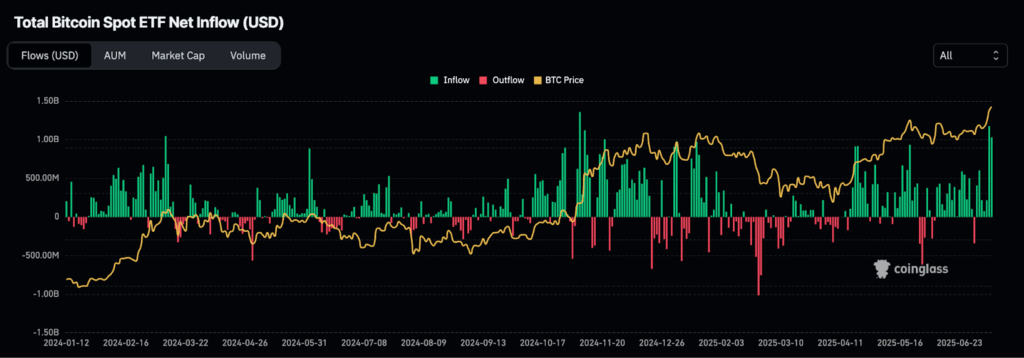
The inflows were not only historic but also reshaped the ETF leaderboard. IBIT’s AUM soared to $80 billion, making it the largest and fastest-growing ETF in history. In comparison, the second-largest ETF—Fidelity’s FBTC—holds approximately $36.4 billion in AUM, while Grayscale’s GBTC trails further behind.
Alongside asset growth, volume also expanded significantly. IBIT posted $5.22 billion in daily trading volume, representing nearly 76% of the total $6.90 billion ETF volume reported across major funds. This activity places IBIT at the forefront of institutional investment tools within the Bitcoin ecosystem.
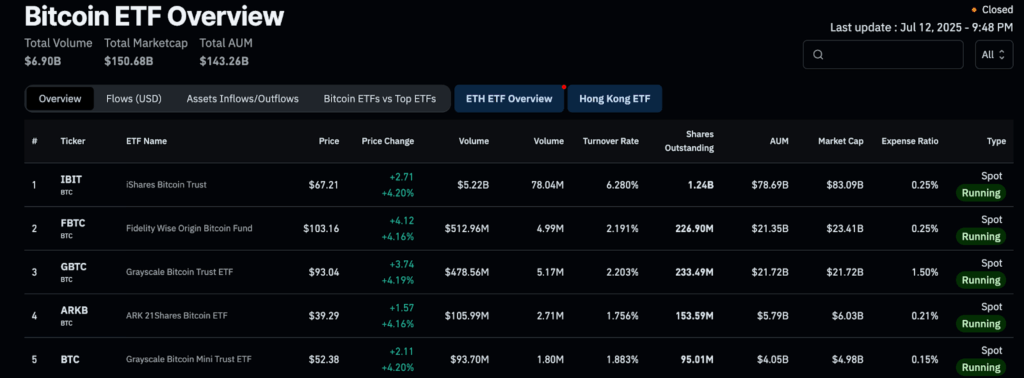
The turnover rates are healthy in the major ETFs. At 6.28%, IBIT had a significant turnover compared to the 2.2% of both FBTC and GBTC. Moreover, IBIT boasts of outstanding shares that are more than 1.24 billion, which is a highlight of its market domination both in terms of volume and number of investors.
Bitcoin ETFs Absorb Supply at Record Rate, Outpacing Miners
While ETF volume has soared, supply from miners has failed to keep pace. On July 9, ETF demand reached 9,963 BTC while only 450 BTC were produced, according to JAN3 Financial. This reflects a 22.14x imbalance between ETF inflows and newly minted Bitcoin.
Bitwise data adds further confirmation of this trend. Since spot Bitcoin ETFs launched in early 2024, net flows into these funds have exceeded 689,130 BTC. Over the same period, just 295,591 BTC have entered circulation through mining, making ETFs the dominant absorption force in the market.
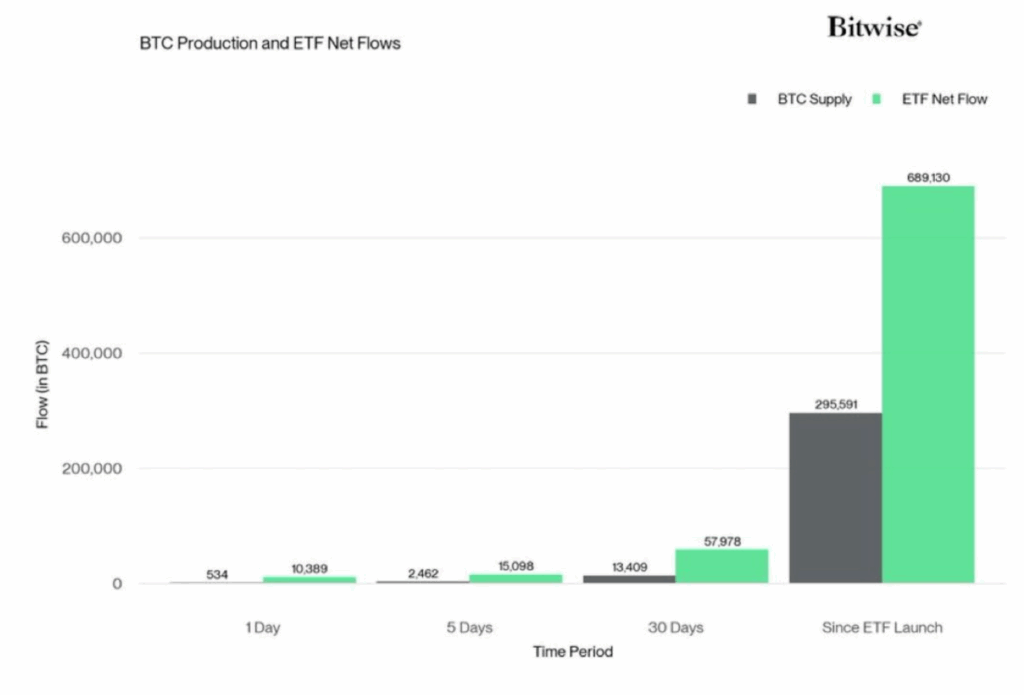
These numbers point to a major change in the market mechanics of Bitcoin. ETFs are no longer trading vehicles, they are long-term asset allocators that are putting supply in lockdown.
Market Structure Shifts as Institutional Demand Grows
Institutional participation through Bitcoin ETFs has also brought resilience to market structure. Although Bitcoin retreated after reaching its peak of almost $119,000, ETF-related indicators remained positive. The low retail involvement, the RSI divergence, and the ETH/BTC recovery are signs of further institutional control.
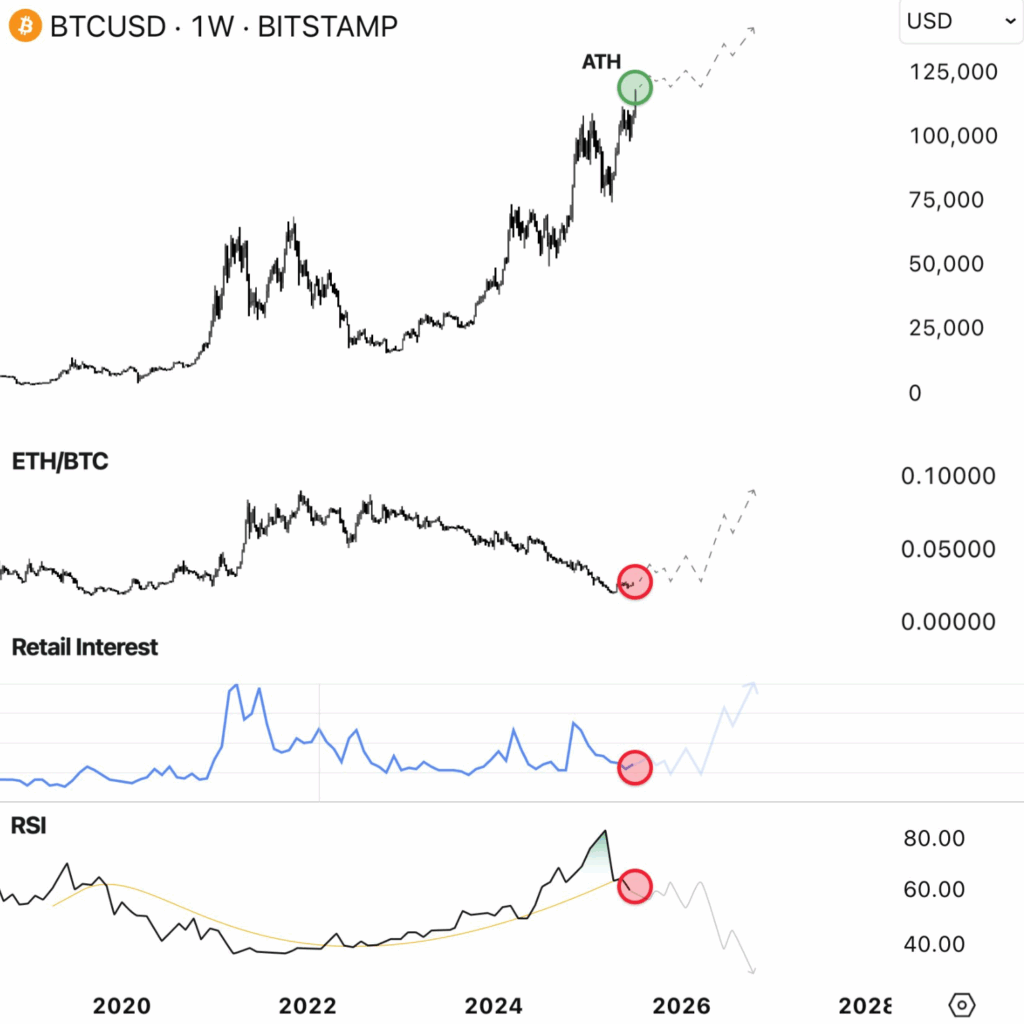
Spot buying is still subdued, but now ETFs are offering the liquidity base that has been required to keep the bull market going. The retail involvement has not made a complete comeback, but the ETF-based purchasing is not at all weak. This disparity is an indication of a healthy build up period, one that is driven by long term strategic capital.
In addition, the level of volume-to-market cap ratio indicates that ETFs will become more capital efficient. The heatmaps provided by CoinGlass verify IBIT as the main holding company, after which there is FBTC, ARKB, and GBTC. Such companies do not only control AUM but also influence directional flows as observed in the long-term positive net activity.
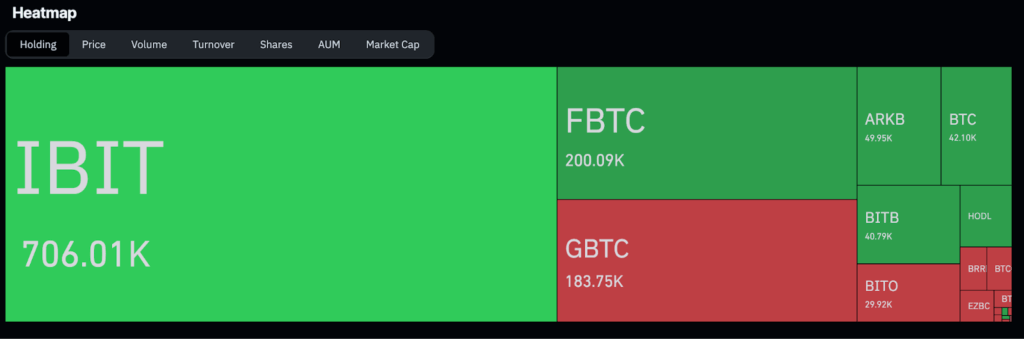
Evidence by Checkonchain also confirms that ETF-linked Bitcoin flows are still acting as a cushion. Their inflows moderate the volatility and offset declining interest on centralized exchanges. As a result, Bitcoin ETFs have effectively become the backbone of price support.
Disclaimer
This article is for informational purposes only and provides no financial, investment, or other advice. The author or any people mentioned in this article are not responsible for any financial loss that may occur from investing in or trading. Please do your research before making any financial decisions.