
 no crying in the casino
 NEAR Protocol
 Starknet
 Pyth Network
 Pearl
Pearl Quantus
 Pudgy Penguins

Key Highlights:
- Central banks are reducing dollar exposure, increasing gold holdings, and favoring the euro and yuan for reserve diversification.
- OMFIF survey shows rising distrust in U.S. policy and growing long-term interest in alternative currencies and non-sovereign assets.
- Bitcoin is gaining credibility as a decentralized hedge, with sovereign adoption and institutional backing strengthening its reserve appeal.
Central banks are abandoning the U.S. dollar as the world reserve currency in favor of gold, the euro, and the yuan. With the increasing economic uncertainty, Bitcoin is a possible digital hedge, providing decentralization, scarcity, and geopolitical stability.
Central Banks Restructure Reserves Amid Dollar Volatility
More central banks are abandoning the dollar as macroeconomic risks continue to increase. According to the latest OMFIF report, 40% intend to increase gold holdings in the next 10 years. This is the highest gold preference rate in the survey’s five-year history.
At the same time, the dollar dropped in the ranking of the most preferred currency to seventh place. More than 70% of central bankers were worried about the U.S.’s political situation affecting the dollar’s reliability. This transition is causing a new interest in hard and digital assets.
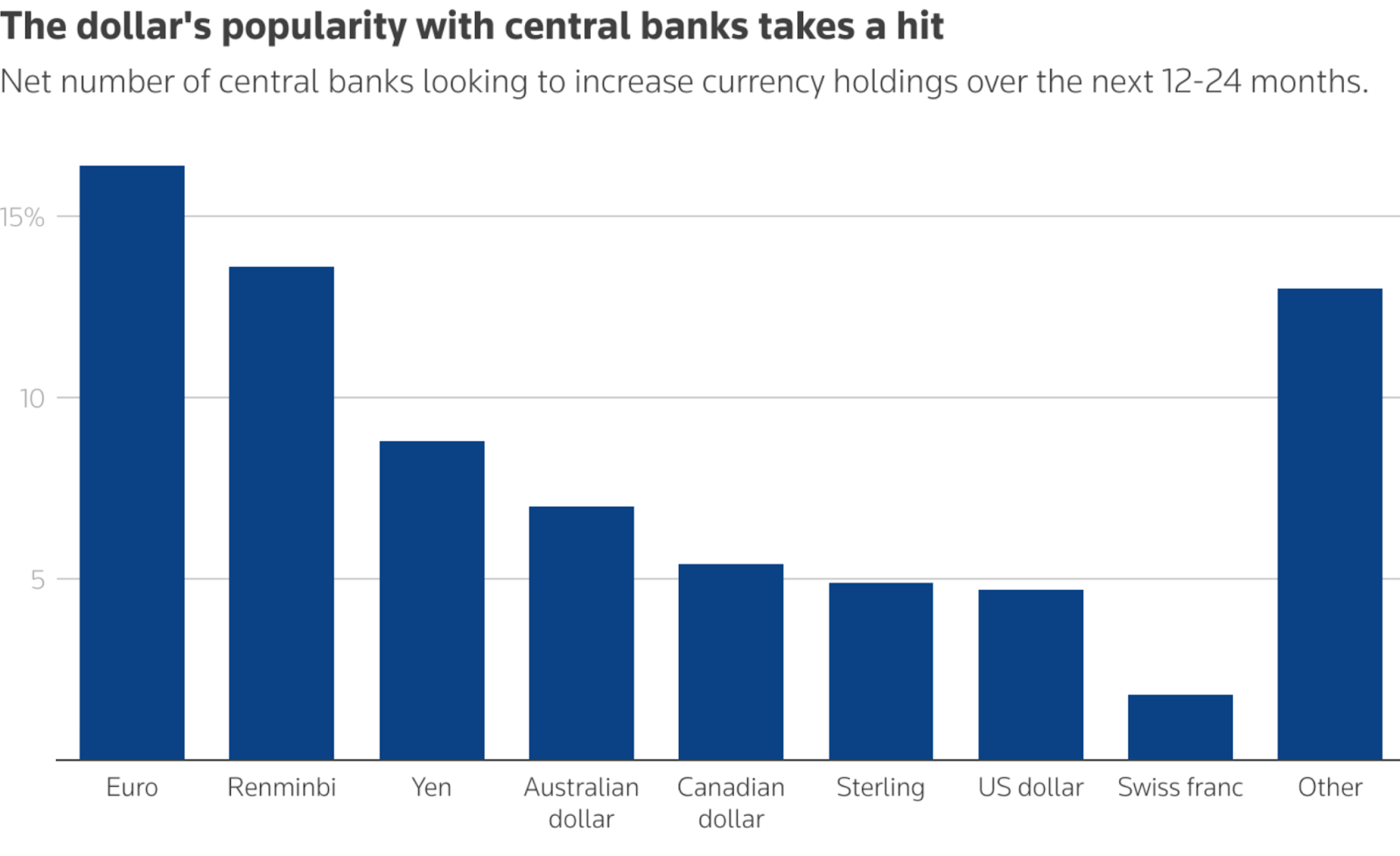
The central banks have more than 12.3 trillion dollars in reserves and are indicating structural change. The euro and the yuan are increasingly becoming popular in the short and long term.
However, non-sovereign hedges such as Bitcoin are also finding their way into the discussion of reserve managers.
Gold Leads, But Bitcoin Gains Strategic Ground
Although gold is still the main beneficiary of de-dollarization, Bitcoin is rapidly becoming a reserve asset of choice. The limited supply of BTC and its decentralized character provide monetary characteristics.
They align with the long-term economic stability objectives. It also gives strength against political interference and capital restrictions.
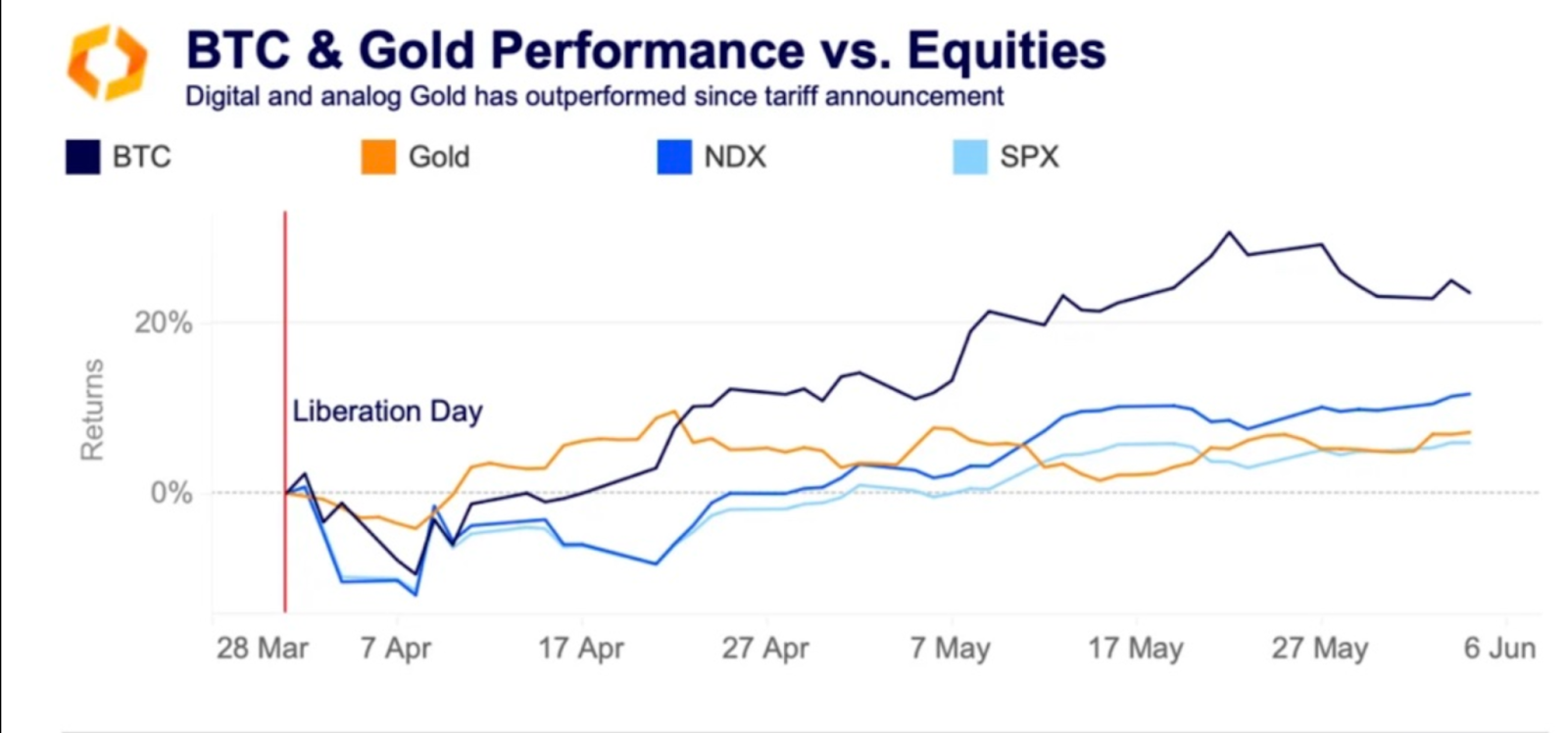
James Butterfill from CoinShares believes Bitcoin is now seen as a modern replacement for gold by sovereign nations. He highlighted that the 2024 halving brought Bitcoin’s inflation rate below 1%.
This makes it more stable and predictable than traditional fiat currencies. As a result, governments are increasingly viewing Bitcoin as a reliable store of value. Central banks are simulating portfolio enhancements using small amounts of Bitcoin.
President Trump issued an executive order to establish the Strategic Bitcoin Reserve in March. It is funded by confiscated Bitcoin and is controlled by Treasury agencies. The order also created a Digital Asset Stockpile of non-BTC assets.
The state of Texas was the first to invest real money, that is, 10 million dollars, in its reserve as per Senate Bill 21. New Hampshire enacted HB 302 to regulate the custody of digital assets with large caps, and Arizona passed HB 2324. It allows the custody of seized BTC.
Sovereign Institutions Rethink Risk and Value
Reserve managers have changed the emphasis to stability and diversification of risks rather than maximization of yield. As the U.S. debt surpasses $37 trillion and inflation is sticky, confidence in the stability of fiat is declining.
The reaction is moderate: expose more to gold, look at the yuan, and investigate new assets like Bitcoin. In a recent note, Butterfill highlighted that Bitcoin has a low correlation with traditional assets, which enhances diversification measures.
An allocation of 4% can increase the Sharpe ratio of central bank portfolios. It is digital, which enables immediate settlement, worldwide accessibility, and immunity to seizures.
Conventional assets such as gold and foreign currencies are limited in a multipolar world. Due to capital controls, debt monetization, and political risks, sovereign-issued currencies are less desirable.
Bitcoin is particularly well placed to hedge geopolitical instability due to its borderless infrastructure and censorship resistance.
Bitcoin Adoption Mirrors Past Reserve Shifts
Historical shifts in reserve assets have occurred in times of economic tension. The dollar replaced the British pound in the 20th century after the structural changes in global finance. The same processes are happening today as countries experiment with digital financial instruments.
Reuters’ report of 2025 ascertains the increasing popularity of the yuan. It is likely to increase its share of global reserves to 6% in 10 years. But its full utility is hampered by capital restrictions.
The euro is likely to regain the lost territory to attain 25%. However, there is uncertainty regarding European integration.
Bitcoin is volatile but has what competitors do not: programmability, scarcity, transparency, and immunity to monetary manipulation. It offers impartiality during the era of increasing geopolitical blocs and disintegrated coalitions.
The credibility of Bitcoin as a reserve instrument rises as Bitcoin’s market cap rises and regulatory frameworks become established. It is not about replacing the dollar but creating a more robust reserve mix.
Disclaimer
This article is for informational purposes only and provides no financial, investment, or other advice. The author or any people mentioned in this article are not responsible for any financial loss that may occur from investing in or trading. Please do your research before making any financial decisions.



