 astronaut
 Pearl
Pearl NEAR Protocol
 Walrus
 Zylo Ecosystem
 Bitcoin
 Hyperliquid
The S&P 500 Global Ratings has described Tether USDT stablecoin’s ability to maintain its peg as weak. In a statement today, the agency said it reassessed the rating from 4, which is constrained to 5, which is weak.
According to the agency, the negative revision is due to the increase in high-risk assets backing the USDT reserves.
It said:
“The negative revision reflects an increase in higher-risk assets backing USDT’s reserve since our last review.”
However, the agency noted that the USDT stablecoin price has been relatively stable over the past few years.
High Risk Assets Account for 24% of Tether USDT Reserve
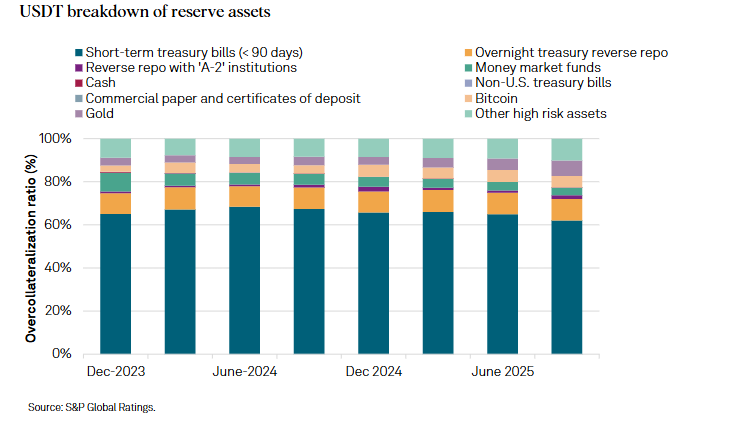
In its review of the USDT stablecoin, the S&P Global Ratings highlighted that high-risk assets in the reserves are a major concern. These assets include Bitcoin, corporate bonds, secured loans, precious metals and other investments that carry risks.
According to the agency, USDT reserves’ exposure to these high-risk assets has increased. They now account for 24% of its reserves as at the end of Q2, compared to 17% at the same time in 2024.
The agency particularly highlighted increased exposure to Bitcoin. It noted that any decline in Bitcoin price or the value of other high-risk assets means a reduction in USDT collateral coverage. Thus, the stablecoin could become undercollateralized.
It said:
“On Sept. 30, 2024, bitcoin represented about 4% of USDT in circulation, below the 5.1% overcollateralization margin implied by a collateralization ratio of 105.1%. As of the latest attestation, bitcoin represents 5.6% of USDT in circulation, exceeding the 3.9% overcollateralization margin associated with a collateralization ratio of 103.9%.”
The review warned that an increasing share of risky assets exposes the USDT to market fluctuations. Meanwhile, it noted that Tether still holds 75% of its reserves in low-risk assets, such as US Treasury bills.
However, it highlighted the fact that there is no disclosure from the company regarding custodians, counterparties, and bankers for these assets. The agency noted that this lack of transparency extends to the failure to disclose the composition of some of its assets. Thus, it considers that it also represents risk factors contributing to its weak rating.
Tether CEO Hits Back at S&P 500 over Ratings
Interestingly, the report has attracted harsh criticism from Tether CEO Paolo Ardoino. Ardoino posted on X:
“To S&P regarding your Tether rating: We wear your loathing with pride.”
According to him, the accuracy of these rating models and the neutrality of rating agencies are questionable. He noted that these models have misled investors in the past by rating weak companies as strong, which means they cannot be trusted.
Ardoino claimed the S&P 500 rating is an attack by legacy financial institutions. He noted that Tether’s success as a profitable, overcapitalized company with no toxic reserves is attracting envy from traditional finance.
He said:
“The traditional finance propaganda machine is growing worried when any company tries to defy the force of gravity of the broken financial system. No company should dare to decouple itself from it.”
However, some users have questioned the Ardoino response, noting that it does not address the concerns raised by S&P. For them, Tether still needs to clarify the S&P assessment and explain why the assessment might be incorrect.