
 Bitcoin
 Ondo
Ondo Pudgy Penguins
 Walrus
 Pons
Pons Quantus
 NEAR Protocol

U.S. spot Bitcoin ETFs opened 2026 with aggressive capital inflows, resetting market expectations early.
More than $1.2 billion entered these products during the first two trading days. Bloomberg senior ETF analyst Eric Balchunas described the start as unusually strong, given recent price volatility.
This surge mattered because U.S. spot Bitcoin ETFs already shaped the price structure during 2024 and 2025. Early 2026 flows suggested renewed institutional demand, even after weaker momentum late last year.
U.S. spot Bitcoin ETFs became the primary transmission channel for large capital allocations into Bitcoin.
ETF inflows Accelerated Despite Mixed 2025 Performance
U.S. spot Bitcoin ETFs recorded net inflows of $21.4 billion in 2025, according to data. That figure lagged behind the $35.2 billion recorded during 2024. The slowdown reflected tighter liquidity conditions and repeated Bitcoin pullbacks.
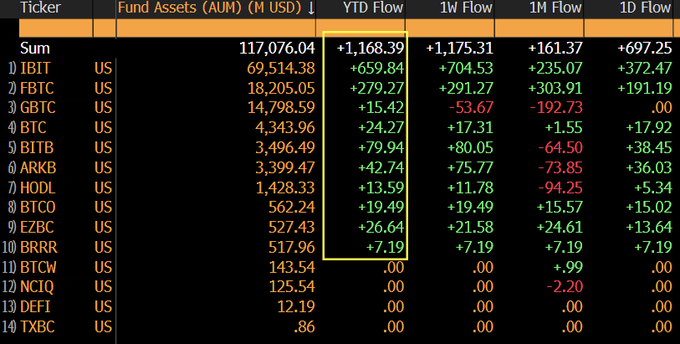
Still, early January reversed that tone quickly. Balchunas said more than $1.2 billion arrived within two sessions, with nearly every fund posting gains. WisdomTree’s Bitcoin Fund remained the only exception during that window.
He added that maintaining this pace would imply annual inflows of nearly $150 billion. That estimate equaled roughly 600 percent of total 2025 inflows. Balchunas framed the move as renewed confidence rather than short-term speculation.
BlackRock continued to dominate Bitcoin ETF demand
BlackRock’s iShares Bitcoin Trust absorbed the largest share of inflows once again. The fund led allocations throughout 2024 and retained dominance across 2025. Early 2026 data showed the same pattern.
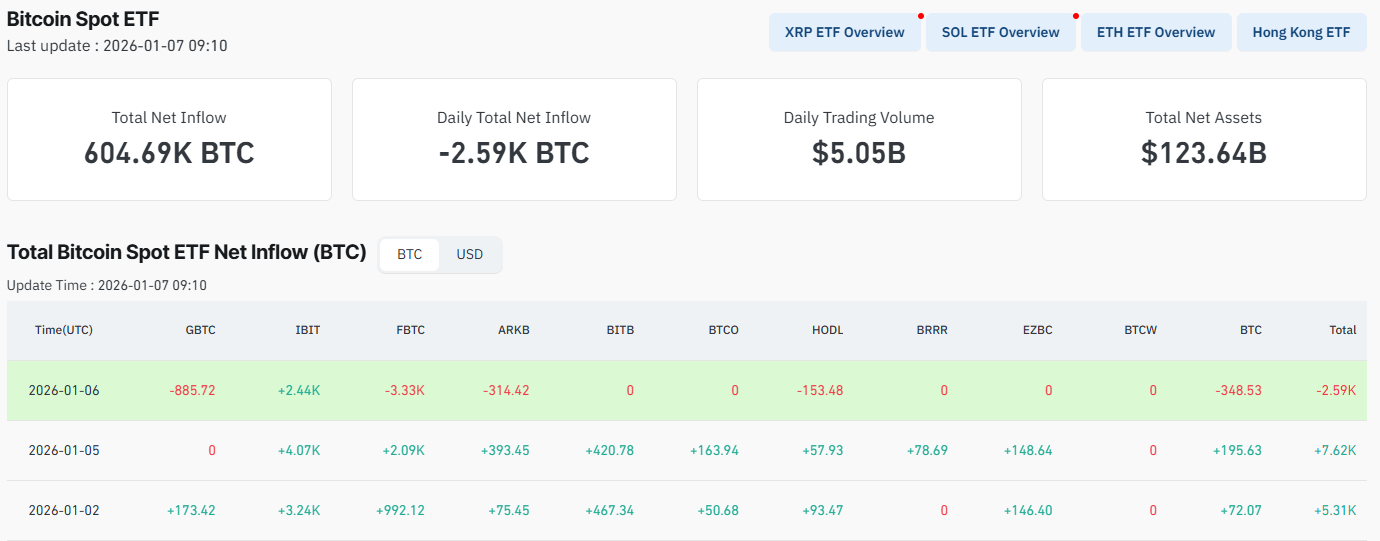
On Jan. 2, combined inflows across issuers reached more than $992 million, according to preliminary figures. Several funds posted positive daily flows exceeding $400 million individually.
This broad participation suggested coordinated institutional allocation rather than isolated trades.
Bitcoin price stability supported that demand. Bitcoin traded above $90,000 during the largest inflow session. The price recovery followed a volatile final fortnight of 2025.
ETF Demand Tightened A Bitcoin Supply
Fabian Dori, Chief Investment Officer at Sygnum, said that ETF demand is increasingly affecting supply dynamics. He noted that ETF inflows absorbed circulating Bitcoin rather than recycling speculative capital. Dori described the pattern as structural demand, not momentum-driven flows.
That interpretation aligned with 2024 behavior, when ETF inflows reduced available exchange balances. Spot Bitcoin ETFs forced physical Bitcoin purchases rather than derivative exposure. This mechanism created persistent demand pressure during accumulation phases.
Dori added that this structure raised the probability of a longer-term supply imbalance. He said the effect mattered more than daily price swings. The supply absorption theme remained visible entering 2026.
Inflow Momentum Showed Early Signs of Cooling
Despite the strong start, flows softened by Jan. 5. Preliminary data showed a higher likelihood of net outflows for the session. Fidelity’s Bitcoin fund recorded a notable redemption during the day.
Pending figures from BlackRock remained unresolved at publication time. Market participants watched whether BlackRock inflows could offset Fidelity’s withdrawals. That dynamic highlighted how a single issuer could still significantly influence daily totals.
This pause did not negate the broader trend. Instead, it underscored the uneven nature of ETF flows. Institutional allocation rarely progressed in a straight line.
Morgan Stanley Expanded Competition in Crypto ETFs
Morgan Stanley filed with the U.S. Securities and Exchange Commission to launch Bitcoin and Solana ETFs. The filing placed the firm alongside BlackRock and Fidelity within the crypto ETF market. Morgan Stanley managed roughly $8 trillion in advisory assets.
According to the filing, the Morgan Stanley Bitcoin Trust would track Bitcoin’s spot price directly. The fund would not employ leverage or derivatives. That structure mirrored existing spot products.
Balchunas welcomed the move, calling it logical given Morgan Stanley’s advisory scale. He said the firm already allowed advisors to allocate client capital into Bitcoin ETFs. Launching an in-house product reduced reliance on competitors.
Bitcoin Price Action Reinforced ETF Relevance
Bitcoin’s recovery above $90,000 coincided with the largest inflow day in three months. On Monday alone, U.S. spot Bitcoin ETFs recorded $697 million in net inflows. That marked the strongest single-day intake since October.
The timing suggested ETFs responded to price stabilization rather than chasing rallies. Bitcoin held its level instead of breaking sharply higher. That behavior supported Dori’s view of structural accumulation.
ETF demand increasingly influenced short-term price resilience. Pullbacks found buyers more quickly than during pre-ETF cycles. This pattern persisted into early 2026.
Near-term Focus Remained on Flow Consistency
U.S. spot Bitcoin ETFs entered 2026 with renewed momentum, but consistency mattered more than headlines. Sustained inflows would validate Balchunas’ $150 billion projection. Choppy sessions would temper expectations.
Market participants monitored issuer-level flows rather than aggregate figures. BlackRock’s daily performance remained the key variable. Regulatory developments and broader liquidity conditions also shaped allocation decisions.
For now, U.S. spot Bitcoin ETFs reasserted their role as the dominant institutional gateway. Early data showed demand returned faster than many expected. The next weeks would test whether that demand endured beyond January.