
 Puffer
 Bitcoin
 ZKsync
 NEAR Protocol
 Walrus
 Pearl
Pearl Ondo
Ondo

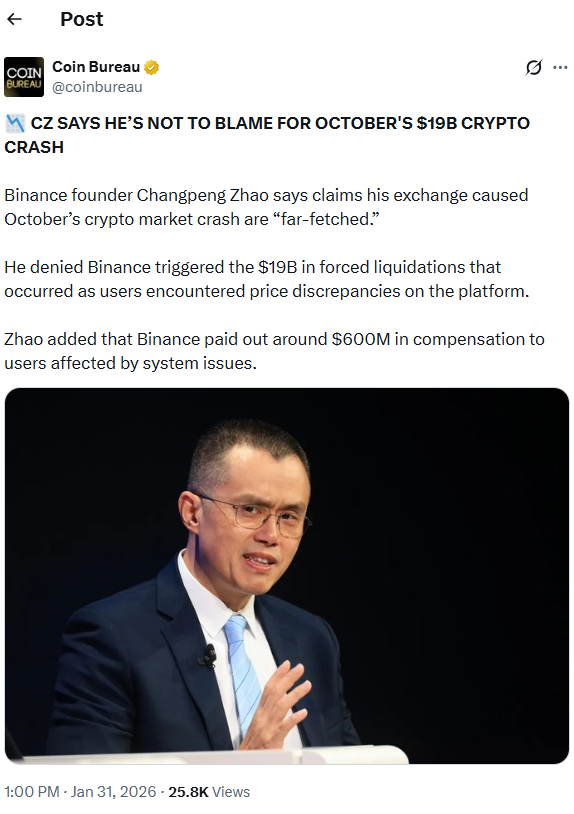
The crypto world faced a huge shock on October 10, 2025. A sudden crash wiped out $19 billion in leveraged positions in just one day. Many traders blamed Binance, the largest crypto exchange, for the losses. Changpeng “CZ” Zhao, co-founder and former CEO, strongly denied these claims.
Speaking in January 2026, he said the accusations were far-fetched. He argued that the crash came from global market forces, not Binance failures. His comments reopened debate about leverage, regulation, and exchange responsibility.
The October 2025 Crash
The crash happened during global turmoil. U.S. President Donald Trump announced 100% tariffs on Chinese imports. He also imposed strict export controls on critical software. These moves shook global markets. Risk assets fell sharply. Bitcoin dropped more than 20% in hours. Ethereum and other altcoins fell even harder.
Analysts said the losses were worsened by extreme leverage. Many traders used ratios above 100x. Thin weekend liquidity made things worse. Forced liquidations cascaded across platforms.
Binance faced heavy scrutiny. Users reported technical glitches. Some orders were delayed. Price discrepancies appeared on tokens like USDe and wBETH.
Traders said these issues caused unfair liquidations. Ethereum network congestion added to the chaos. Gas fees rose sharply. Arbitrage and interventions became difficult.
CZ’s Defense and Binance’s Response
In a live AMA session, CZ rejected blame. He said the problems were not unique to Binance. Price differences hit users on other exchanges too, including Coinbase and Bybit.
Blockchain analytics firms like Chainalysis and Glassnode confirmed this. They showed the crash was systemic, driven by macro shocks.
CZ reminded users that Binance paid out $600 million. This money came from its Secure Asset Fund for Users (SAFU) and recovery programs. The payout covered verified cases of glitches. It did not cover general market losses. He called the demands for full compensation unrealistic.
Binance has faced scrutiny before. The collapses of FTX and Celsius in 2022 exposed risks in leveraged trading. In response, Binance strengthened compliance. It now operates under strict oversight in Abu Dhabi.
It is also monitored by the U.S. government after a 2023 settlement over anti-money laundering violations. CZ stepped down as CEO during that plea deal. He said Binance now runs regular proof-of-reserves audits to show transparency.
Criticism and Calls for Regulation
Not everyone was convinced. Cathie Wood of ARK Invest said big exchanges amplify volatility. She argued that when liquidity dries up on one platform, it spreads everywhere.
On social media, backlash grew. The hashtag #BinanceCrash trended. Many users shared stories of losing portfolios. Some analysts suggested rival exchanges or short sellers may have fueled fear campaigns.
The crash renewed calls for stricter rules. The U.S. Commodity Futures Trading Commission (CFTC) is reviewing leverage caps. The European Union’s MiCA framework already limits risky products.
Industry groups like the Crypto Council for Innovation want better risk disclosures. They also push for decentralized alternatives to reduce such risks.
By January 31, 2026, markets had partly recovered. Bitcoin traded near $80,000. Still, the October crash showed how fragile crypto remains. CZ’s words may calm some, but many traders still debate who should take responsibility. Binance declined further comment, pointing to its official statements.