Wisp
Wisp Doge Pepe
 Crawlerpad
 Zylo Ecosystem
 Pearl
Pearl Basic Attention
 Quantus

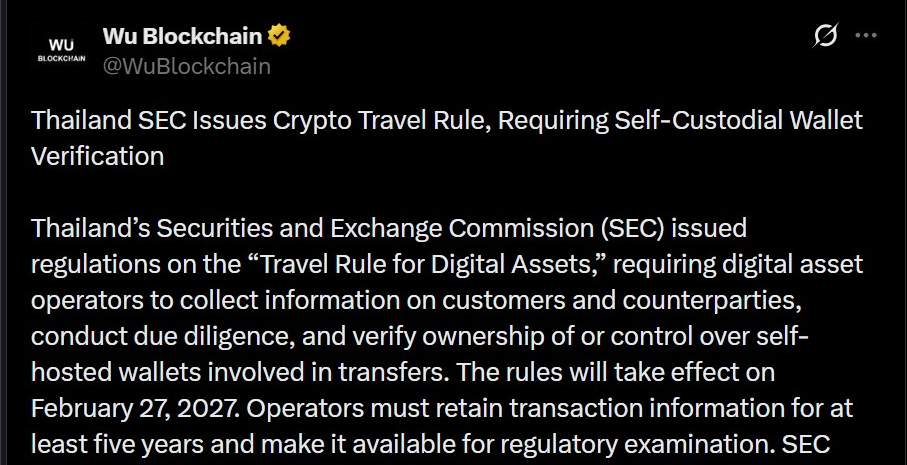
Thailand has finalized new crypto Travel Rule requirements covering digital asset transfers, counterparties, self-hosted wallets and transaction records.
The Securities and Exchange Commission announced the final framework on Sept. 2 after coordinating with Thailand’s Anti-Money Laundering Office. The rules take effect on Feb. 27, 2027, giving licensed digital asset businesses almost six months to update their systems.
The framework requires operators to collect transfer information, assess counterparties and transmit originator and beneficiary details when sending assets to another regulated provider. It also introduces specific verification requirements when customers transact through wallets they control directly.
Thailand Crypto Travel Rule Adds Wallet Verification
Thailand’s new crypto Travel Rule will require digital asset operators to collect information about customers and transaction counterparties. The rules cover transfers between regulated businesses and transactions involving wallets that users control directly.
Self-hosted wallets allow users to hold their own private keys instead of keeping assets with a centralized exchange or another custodian. Under the new framework, a licensed operator must verify that a customer owns or controls a self-hosted wallet when crypto moves to or from that wallet.
The requirement adds an extra compliance step for withdrawals and deposits involving personal wallets. Crypto businesses will need systems that can identify customers, review wallet ownership and keep the required transaction information available for regulatory checks.
Operators must also keep information connected to digital asset transactions for at least five years. The records must remain accessible so supervisory authorities can review them when required.
Transfers Between Crypto Firms Face New Rules
The Thailand crypto Travel Rule also introduces information-sharing requirements for transfers between regulated digital asset operators. The business sending the transaction must provide information identifying both the originator and the beneficiary with the transfer instruction.
The crypto regulations also cover transactions that pass through an intermediary operator. These measures focus on tracing the parties involved in digital asset transactions. They also give regulated firms more information when reviewing transfers for money laundering, terrorist financing and technology-related financial crime.
Thailand will introduce the framework after a consultation process that started earlier in 2026. The regulator sought comments on the main Travel Rule principles in March and later opened another consultation on draft regulations in June. The final timetable gives crypto operators nearly six months to prepare before the rules take effect.
Thailand Moves Closer to Global AML Standards
Thailand’s crypto Travel Rule follows wider adoption of similar requirements across the digital asset sector. Governments have applied the Financial Action Task Force framework to virtual asset transfers and crypto service providers.
The international standard requires regulated businesses to collect and transmit identifying information when they process qualifying digital asset transfers. The system brings crypto transaction monitoring closer to controls already used in other parts of the financial sector.
By 2026, most jurisdictions covered by FATF’s latest review had introduced Travel Rule legislation. Thailand’s new rules extend that approach to transactions involving personal wallets, an area that can require different checks from transfers between centralized platforms.
Thailand Crypto Regulation Moves Toward Broader Oversight
Thailand’s new crypto Travel Rule expands regulatory oversight beyond exchange licensing and trading rules.
From Feb. 27, licensed digital asset operators must collect customer and counterparty information, verify ownership or control of self-hosted wallets and transmit relevant data between regulated providers. They must also retain transaction information for at least five years.
At the same time, Thailand is considering regulated access to crypto derivatives and domestic Bitcoin and Ethereum ETFs. Those initiatives show the regulator combining broader investment access with stronger AML and supervisory controls.
The Travel Rule is the most advanced of these changes because it has already been finalized. Operators now have until February 2027 to prepare their compliance and transaction-monitoring systems.
This article is for informational purposes only and does not constitute legal, financial or investment advice.